
What two contrasting deals reveal about the future of the fund administration industry
By Robin Bedford, CEO, Opus Fund Services
Key takeaways
· Two deals, one question. KKR has agreed to buy Gen II Fund Services for $5.1 billion, while UBS has agreed to transfer its fund administration businesses to Northern Trust. These are different strategic choices, but both raise the same question: what does it take to run fund administration well?
· Scale still matters, but operating model matters more. Scale spreads costs, but growth without integration adds complexity and manual effort. The test is how effectively an administrator’s operating model scales.
· AI helps, but it doesn’t replace experience. Connected data, workflows, controls and experienced people count more than an “AI-native” label. Administrators should adapt in a controlled way and prove it against real client work.
Within 24 hours, two announcements put the economics of fund administration in focus: KKR agreed to buy Gen II, while UBS chose to transfer its administration businesses to Northern Trust and extend its outsourcing arrangements. Why should one invest in a business that another major institution is choosing not to run itself?
On October 5, KKR announced an agreement to acquire Gen II Fund Services for an enterprise value of $5.1 billion. A day later, UBS announced that it would transfer the former Credit Suisse traditional and alternatives fund administration businesses in Switzerland and Luxembourg to Northern Trust, while extending its existing outsourcing arrangement to additional funds.
These are different strategic decisions, not contradictory verdicts on the fund administration industry. One invests in a specialist fund administrator; the other relies on a specialist rather than delivering the service in-house. Two announcements, two choices, one underlying question: what does it take to run fund administration well, and who is best placed to do it?
For decades, scale helped protect established fund administrators. Large client bases spread infrastructure costs, while extensive teams and global operations gave incumbents advantages that smaller competitors struggled to replicate. Technology is changing how those advantages are built, but a leaner organization or an AI-native starting point is no substitute for operational experience.
An attractive business to enter. A demanding one to run well.
From the outside, the attraction to fund administration is easy to see: a growing market, sticky client relationships and predictable recurring revenue. The harder question is: what does it take to deliver the service well?
“Just produce the NAV.” That phrase captures how straightforward the service can sound when reduced to its final output. Behind it are more than 150 interconnected functions that must work together, accurately and on time. Getting most of them right is not enough.
Consistently accurate work, delivered on time, is the minimum clients expect. Thousands of correctly completed steps do not cancel out a serious process failure or mistake. Even a single error affecting one client can expose control gaps and have consequences beyond the fund or team involved, with potentially catastrophic effects for both the client and the fund administrator.
Reliability therefore depends on more than a series of individual tasks being performed well. Each function must work correctly and in step with the others, consistently across funds with different structures, transactions, investors and service requirements.
That is where technology becomes central to the competitive argument: not simply automating individual tasks, but connecting data, workflows, controls and people into one coherent operation. The big divide is between fund administrators that can make those connections and those still dependent on disconnected systems and manual hand-offs. AI makes that divide harder to hide.
When the moat becomes a risk to its owner
Scale still matters. Accounting systems, compliance, cybersecurity, regulatory reporting and operational resilience require sustained investment. Spreading those costs across more clients and funds can create efficiencies.
Acquisition-led growth often leaves firms operating multiple accounting platforms, investor portals, reporting systems and ways of working. Each requires specialist knowledge, data flows and integration with other parts of the business. Bringing these into a single, reliable operating model is a major challenge. Without successful integration, growth adds complexity and manual effort as quickly as revenue, turning infrastructure from an enabler into a constraint.
Meanwhile, managers want responsive service, investors want transparency and regulators expect demonstrable oversight, all against relentless fee pressure.
Scale was once the incumbent’s protective moat. Without integration and the ability to adapt, a fund administrator risks drowning in its own complexity. The question is no longer simply “How large are you?” but “How effectively does your operating model scale?”
How AI is changing fund administration
A polished sales pitch and a familiar name may open doors, but they do not prove operational capability. AI raises the stakes: what matters is how technology helps people deliver, not what the brochure promises. For large fund administrators, the barrier can be organizational as much as technical: fragmented platforms, layers of approval and competing priorities can stall practical improvements. Capital helps, but it cannot replace the ability or willingness to change.
Clayton Christensen’s book The Innovator’s Dilemma offers a warning: commercially rational decisions can leave incumbents exposed to new competitors. For fund administrators, the challenge is balancing the demands of today’s business with investment in tomorrow’s operating model. If AI enables competitors to improve service, controls and capacity faster, waiting until clients demand change risks leaving the firm playing catch-up. The real risk is not moving too early but moving too late.
Adaptation must be practical and controlled
The challenge is not simply to adopt AI faster, but to adapt properly, without weakening controls or disrupting service. AI in isolation is no panacea: every client brings different fund structures, transactions and reporting needs. Technology must solve those real-world problems, not assume they will fit a standard model.
Calling a business “AI-native” is not a substitute for solving those challenges. “Build one platform and clients will come” is not an operating strategy. An entrant must prove its model against real client work; an established fund administrator must improve its operation without compromising reliable delivery. Both need connected data and workflows, tested changes and experienced people overseeing exceptions.
The test is whether changes deliver better service, stronger controls and greater capacity against real client requirements, not whether a fund administrator has adopted the latest AI label.
How to choose a fund administrator: questions to ask
Do the fund administrator’s capabilities match its claims, and can it grow with you? Look for evidence that it can meet your fund’s needs today and adapt to what you will need in one, three and five years. With technology and operating models changing rapidly, proven capability and the ability to evolve matter more than size or an “AI-native” label. If you are evaluating administrators, talk to our team about how Opus approaches these questions.
Where Opus fits
At Opus, embracing technology, automating work and continually improving how we operate are core values, not a response to the latest AI trend. Founded in 2006 on the belief that technology could enable a different approach to fund administration, we see evolution as a continuing responsibility. Our Digital Back Office puts that philosophy into practice by connecting workflows, controls, data and people in one operational environment.
Asking “why?” is a fundamental requirement of working at Opus. Why do we do it this way? What could work better? That curiosity and passion for improvement give AI its direction, not the other way around. Our experienced people understand the work, recognize its challenges and see where it could go next. AI helps accelerate their ideas and turn that vision into practical improvements; it does not replace the experience or ambition behind them.
Technology is a core part of how we manage the operation, not simply a way to reduce its cost. Improvement is controlled. Connected processes make work measurable, embedded controls provide evidence, and unified data supports oversight.
For clients, the objective is to work with a fund administrator that evolves with them: delivering faster answers, clearer visibility and more responsive service as their needs change. The commitment is not to a fixed platform or an AI label, but to continuous improvement that supports growth without compromising control.
Different strategies. The same test.
We began with two different strategic choices: KKR agreeing to acquire Gen II, and UBS transferring administration businesses to Northern Trust. One chose to own specialist capability; the other chose to access it. The announcements do not establish AI as the reason for either decision, but they frame the question: if you choose to stay in the fund administration industry, are you prepared to keep investing and adapting or risk being left behind?
Staying competitive means investing in technology, cybersecurity, controls and experienced people, and having the culture to turn that investment into continuous, controlled improvement. Scale provides resources; experience and curiosity give AI direction. Without that combination, incumbents risk drowning in complexity and entrants risk solving the wrong problems. AI can accelerate improvement; it cannot replace the experience and judgment behind it.
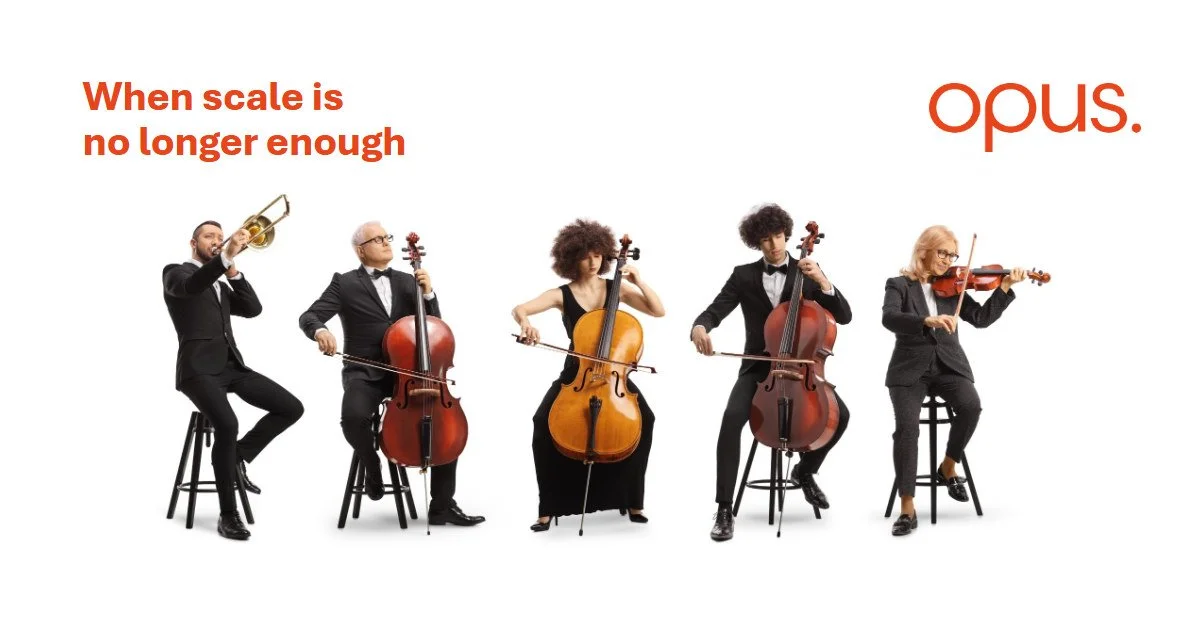
Fund administrators that meet this challenge will work like a well-conducted orchestra bringing a musical opus to life: experienced people, technology and controls coordinating more than 150 interconnected functions into one coherent performance. Clients need never notice the complexity behind it; they simply enjoy reliable service that keeps getting better.
Frequently asked questions
Is scale still an advantage in fund administration?
Yes, but it is no longer enough on its own. Scale spreads the cost of systems, compliance and resilience, but without integration, growth adds complexity as quickly as revenue.
Why did KKR agree to buy Gen II while UBS moved its administration businesses to Northern Trust?
They were different strategic choices: one invests in a specialist, the other relies on one. The announcements do not establish AI as the reason for either.
Does AI replace experienced people in fund administration?
No. AI can accelerate improvement, but it cannot replace the experience and judgment behind it.
What should fund managers ask when choosing a fund administrator?
Whether its capabilities match its claims, and whether it can adapt to what you will need in one, three and five years.
About Opus Fund Services
Established in 2006, Opus Fund Services is an independent global fund administrator serving alternative investment managers across a range of strategies. Its Digital Back Office connects fund administration workflows, data and controls in a unified operational environment, combining intelligent automation with experienced professionals. The model is designed to help managers scale their operations, strengthen oversight and provide greater transparency to investors, with services tailored to their strategy and business needs.
Opus Fund Services · Engineered for Growth.